

Do You Believe?

A couple weeks ago, I really wanted a scone. Not the dry, industrial-grade triangle that makes your mouth feel like it’s full of sawdust—I’m sure you’re imagining that one. I’m talking about the scone that feels more like a biscuit than a store-bought cookie. The kind this place (RIP) sold near my apartment during grad school (and that led to some… weight gain).
Somehow, I came up empty in my neighborhood, despite roughly 30 coffee shops and bakeries within a one-mile radius.
“Fine,” I said, “I’ll do it myself.”
Now, I know the Mad Titan Thanos is not a role model for any (most) of us. And I know my espousal of an outwardly individualistic ethos might run contrary to the goals of this newsletter, but bear with me for a bit.
The other night, I took part in one of my favorite activities: getting to know the regulars at a neighborhood bar. Drexl happens to be the first Oakland bar I ever visited, back in 2015 or earlier. One of the regulars I met was Chef Lala, who told me she couldn’t find any salt-and-pepper crab or shrimp she liked—so she made some herself. Now people online have been fawning over it and showing up to eat it.
A friend from college also said he’s long wanted a mobile Zelda game, so Kevin’s working with his elementary-school-aged kid to use Claude to design and build the video game they want. They’re currently using a spreadsheet to brainstorm heroes and villains because, as he1 puts it, “the first step is always to make a PRD.”
The last example I’ll offer is a friend from high school I caught up with yesterday. Coach Balto2 is doing really awesome stuff with Bike Bus World out of Portland. I was excited to hear what got him into building community via bikes in neighborhoods—and what his plans were for world domination. Surprisingly (or not), he said, “There’s no boss of the Bike Bus. You don’t need to ask permission to create joy and community in your neighborhood.”
My question in this week’s post is not about how we each develop ever more idiosyncratic interests that pull us away from one another. My question is one of self- and collective efficacy.
You might remember self-efficacy from your Psych 101 class. Albert Bandura introduced the concept in the late 1970s as “the belief in one’s capabilities to organize and execute the courses of action required to manage prospective situations.” In other words: Do I believe I can do the thing?
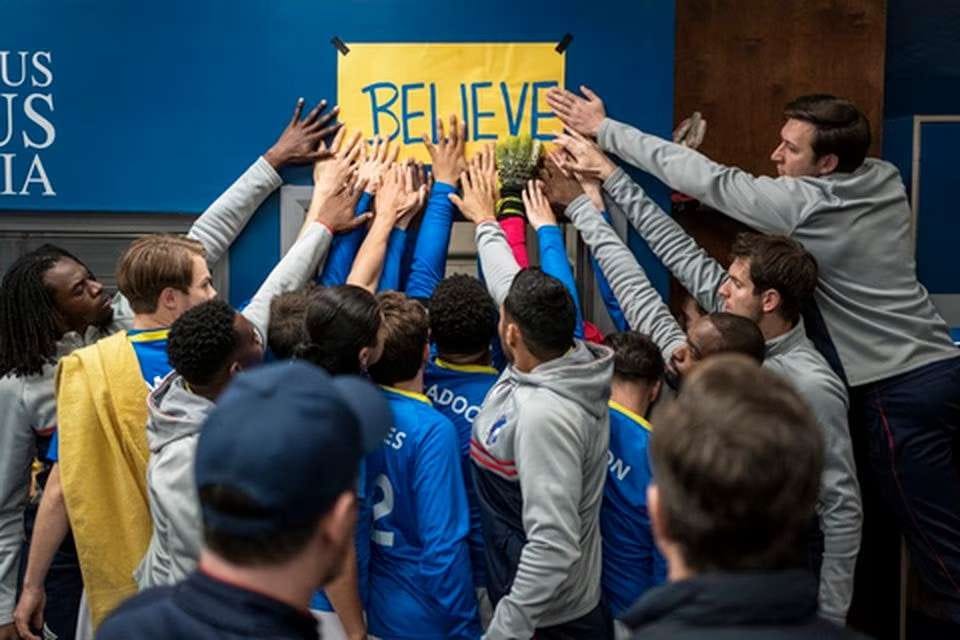
Chef Lala could’ve just gone without salt-and-pepper shrimp. Kevin and his son might not have a game and be doomed to Roblox. And I could’ve settled for the desiccated vegan scone at Hudson Bay Cafe. But none of us did—because of some sense of self-efficacy.
But where does that come from? Bandura would say mastery experiences. Lala is a chef; she’s cooked a lot of things before. So she has reason to believe she can cook this new thing. Jared got chubby from baking during the pandemic. So he has reason to believe he can learn to make a scone.
The more complex question is how that individual notion of efficacy expands into a collective one. As an extension of his social cognitive theory, Bandura wrote in 20003 that “people’s shared beliefs in their collective power to produce desired results are a key ingredient of collective agency.” He did not believe collective efficacy was merely the sum of a group’s individual confidence.
And, perhaps counterintuitively, he also rejected the idea that self-efficacy equates to egoism or selfishness:
“A sense of efficacy does not necessarily spawn an individualistic lifestyle, identity, or morality. If belief in the power to produce results is put to social purposes, it fosters a communal life rather than eroding it. Indeed, developmental studies show that a high sense of efficacy promotes a prosocial orientation characterized by cooperativeness, helpfulness, and sharing.”
In my work with JOINERS and Rejoinder, I think a lot about civic efficacy—how communities come to believe that together, they can do the thing. I keep coming back to how we give young people “mastery experiences” that show them they can impact their neighborhoods and communities side by side.
But we don’t operate in a vacuum. We live in the real world. We live in context—what that other guy from your Psych 101 class, Uri Bronfenbrenner, would call an ecological system. Just as self-efficacy is shaped by prior mastery experiences, our sense of collective efficacy—especially in civic and political contexts—is shaped by experience, too.
People aren’t just asking, “Can we do this together?” They’re asking, “Does doing this together actually matter?” On some level, we’re all calculating whether acting collectively can change anything—and whether the system and its institutions are actually listening. And for many communities (e.g., Black, Indigenous, and other folks of color) that calculation is shaped by generations of experience with systems that have failed to protect them, excluded them, or actively harmed them.
For some people, the system works. They have the time and energy to organize and vote. They have the means to lobby and negotiate. And when the system doesn’t listen, they can escalate pressure through existing channels because they have access to those channels.
But others have learned, through experience, that the system doesn’t listen. And for them, the streets become the recourse.
Despite what Fox News says, protest isn’t chaos or riots or rage. It’s a mastery moment. Protest isn’t low civic efficacy. It’s evidence of high collective efficacy paired with low institutional trust.
Despite the moment we’re in.
Despite increasing callousness out of Washington and growing despair as more murders are caught on film.
Despite decades of terror and abuse by a weaponized state, disproportionately borne by Black and Brown communities.
We still have civic belief.
The protests against ICE in Minneapolis are proof of it. Because if people didn’t believe they could get ICE out of Minneapolis, they wouldn’t be standing outside in sub-zero temperatures. They aren’t waiting for the administration to play nice. They’re pushing them out.
So the question for us is this: if collective efficacy is built through experience, what kinds of civic experiences are we giving people before things reach a breaking point? How do we help people cultivate and sustain belief in one another, even when they don’t believe in the system?
Because that’s where the real power has always been. In us.
Upcoming Events
April 11. Join or Die: The Oakland Join-Up Screening. We’re kicking off the The Oakland Join-Up us for a Saturday night screening of Join or Die, our favorite documentary about the decline of clubs, associations, and civic life—and why they matter more than ever. RSVP on Luma.
April 12. The Oakland Join-Up Activity and Resource Fair. The Oakland Join-Up Activity Fair is about turning interest into action. No pressure, pitches, or performance. Stop by to meet 20+ local clubs, community groups, mutual aid projects, arts collectives, and civic initiatives. Let us know if you want to partner or sponsor. RSVP on Luma.
A product design leader
Do yourself a favor and throw him a follow and get yourself uplifted.
When I was probably getting my biggest dose of collective efficacy in starting the Rosemary Hills Lacrosse Camp alongside two of my friends Jordan and Laura.